Every year, around your birthday, two ideas come up in conversations about astrology. One is the Solar Return, the chart many people look at to think about the year ahead. The other, very popular in Brazil, is the Inferno Astral, literally the “astral hell”: the stretch before your birthday when, people say, everything goes wrong. The two often travel together, but they are very different in nature. The Solar Return is an astronomical moment, calculable to the second. The Inferno Astral is a cultural tradition, lively and interesting, but without the same technical basis. Telling them apart helps you make the most of each one without falling into needless fear.
What the Solar Return is
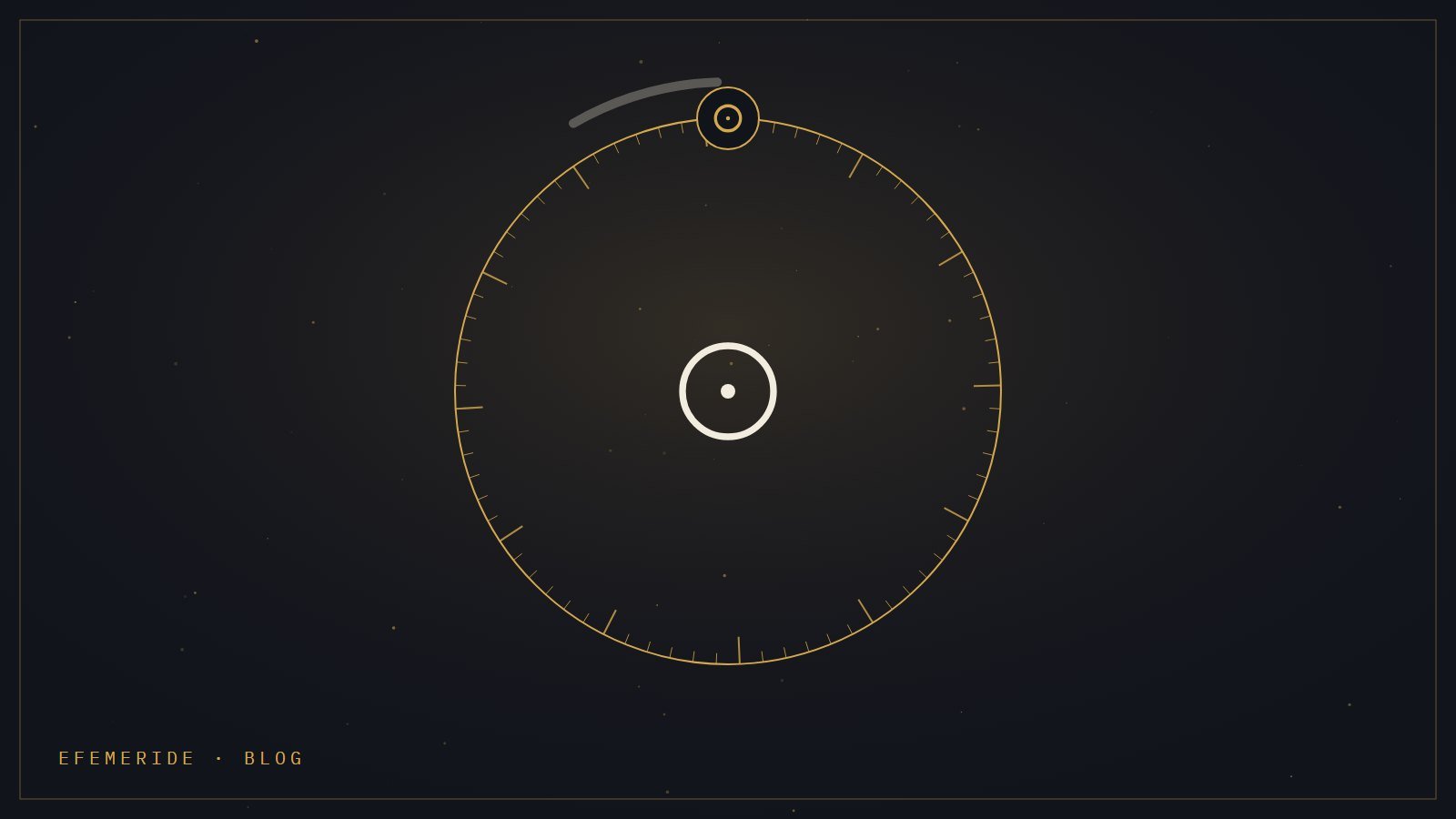
When you were born, the Sun occupied a precise point of the tropical zodiac, measured in degrees, minutes and seconds of longitude. Say it was 14° 27' Gemini. Over a year, the Sun moves through all twelve signs and, around the same time the following year, returns to exactly 14° 27' Gemini. That moment is your Solar Return.
Astrology casts a chart for that moment, as if it were a new birth, and uses it to reflect on the themes of the year that runs from one return to the next. The birth chart remains the foundation; the Solar Return is a layer placed on top of it for twelve months.
Your birthday is a date on the calendar; your Solar Return is a moment in the sky, and the two do not always coincide.
Why the Solar Return can fall a day early or late
Many people are surprised to see that their Solar Return does not land on their birthday. There are very concrete reasons for this:
- The solar year is not a whole number of days. The Sun takes about 365.24 days to return to the same point of the tropical zodiac. The calendar makes up the difference with leap years, but it does so in one-day jumps, while the sky moves continuously. Each year, the moment of the return slips a few hours against the clock.
- Time zones matter. The moment of the return is the same for the whole planet. If it happens at 11 p.m. in São Paulo, it is already the next day in London. The date you see depends on where you are.
- Birth time matters. If you were born close to midnight, the return is more likely to fall on the day before or after your birthday.
That is why the return can fall one day before or one day after the date you celebrate. None of this changes what your birthday means; it simply shows that the sky and the calendar use different rulers. In the app, the Solar Return comes with the date, the time and the Sun's exact longitude, so you can check the match degree by degree.
Why where you spend your birthday changes the chart of the year
Here is a detail that often causes confusion. If the moment of the return is the same worldwide, why does the place matter?
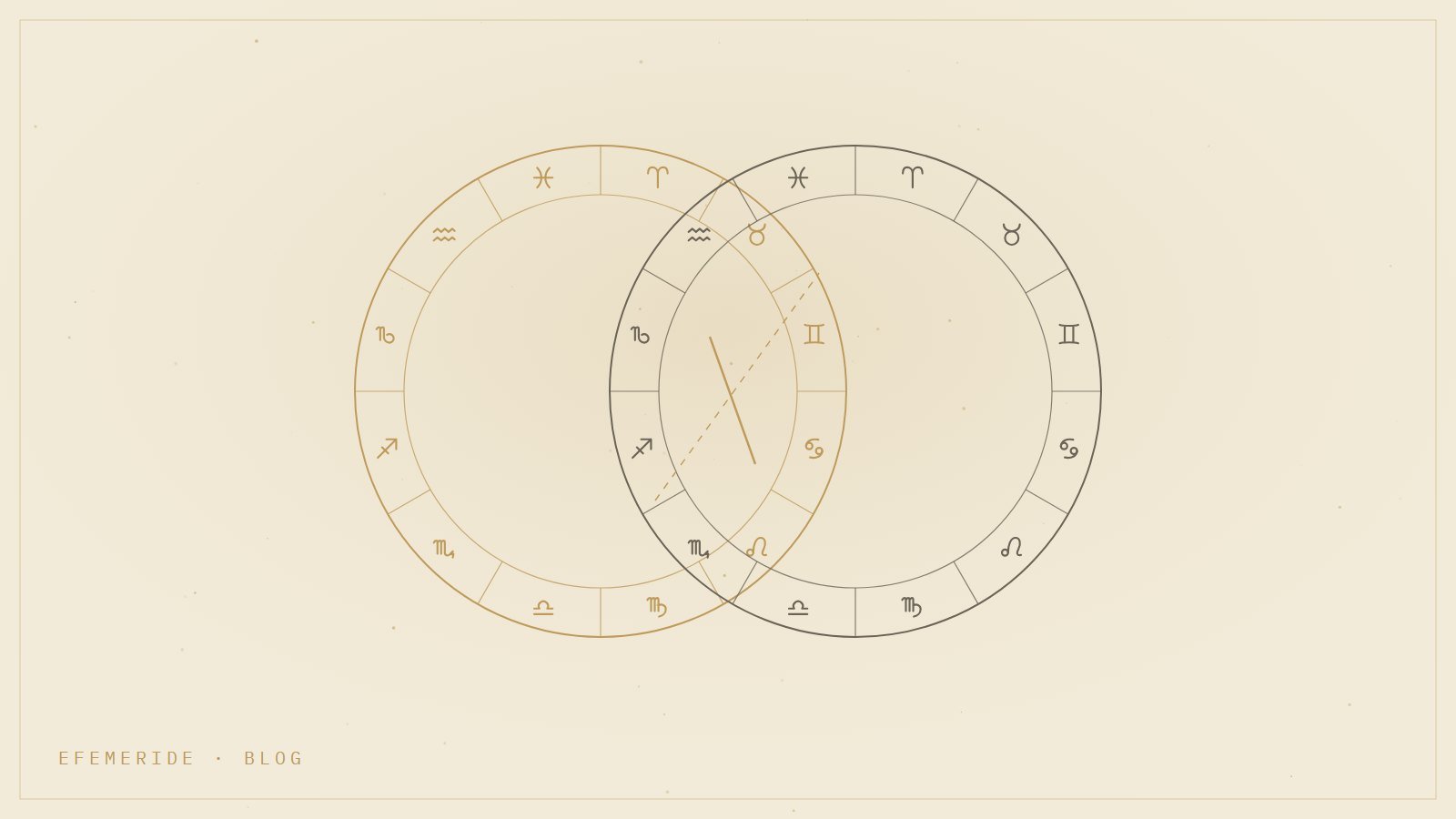
Because a chart has two parts. One is the position of the planets in the zodiac, which at a given moment is the same for every observer on Earth: the Sun, the Moon, Venus and the rest are in the same signs and degrees. The other is the local frame: the Ascendant, the Midheaven and the twelve houses. This frame depends on where you are, because it shows which part of the zodiac is rising on the eastern horizon and which is at the highest point of the sky in that place.
The Earth turns 15° per hour. If you spend your birthday 15° of longitude west of where you live, the local sky there is an hour behind, and the Ascendant can change sign. As a result, the same planets fall into other houses. A Sun that would be in the 10th house in one place may appear in the 9th somewhere else. Tradition reads the houses as areas of life, so the year's emphasis moves.
Because of this, there is a practice of choosing the city where you spend your birthday to get a Solar Return with a preferred layout. It is a well-known practice that some schools defend and others approach with caution. If it interests you, keep in mind: your birth chart does not change, and no trip erases the year's challenges or guarantees its potential. What changes is the frame of the reading.
What people usually look at in a Solar Return
- The return's Ascendant and the house where the Sun falls, read as the tone and main focus of the year.
- The Moon's position, linked to the emotional needs of the period.
- Planets near the angles of the chart, which gain prominence.
- The relationship between the return chart and the birth chart, for example when the return's Ascendant falls on a natal planet.
What the Inferno Astral is
The Inferno Astral is a Brazilian folk tradition. It holds that the roughly 30 days before your birthday tend to feel heavier: tiredness, setbacks, a sense that nothing moves. The idea is widespread in Brazil and almost everyone there has heard of it, but it is not a technical concept of classical astrology. You will not find it as a rule in the old treatises on interpretation.
There is a symbolic logic that helps explain where the idea comes from. During those thirty days, the Sun crosses the last 30° before the position of your natal Sun, a stretch some readings link to the end of a cycle and to the themes of the 12th house: withdrawal, closure, what is hidden. Symbolically, it makes sense to think of the period before your birthday as the end of a personal year.
There is also a very human explanation. The end of a cycle invites taking stock, and taking stock brings up what did not go the way you wanted. If you expect a bad month, you will probably pay more attention to each stumble and less to what went right. Expectation colors experience.
Why treat the Inferno Astral as a tradition, not a verdict
Treating the Inferno Astral as a tradition means recognizing the cultural and symbolic value of the idea without giving it the power to decide your month. A few reasons:
- It does not come from a calculation of its own. There is no aspect, orb or position that defines the Inferno Astral for each person. It is a calendar window applied the same way to everyone.
- It ignores your chart. Two people with birthdays in the same week go through different transits, because their birth charts differ. A rule that applies to everyone says little about anyone.
- Fear is not preparation. Expecting the worst rarely helps you deal with what actually happens. Using the period as an invitation to pause, on the other hand, can be useful.
A lighter way to live those weeks is to keep what the tradition does well: time to close loose ends, rest a little more, look back at the year that is ending and think about what you want to carry into the next one. That is a rite of passage, and rites of passage do many people good. It only stops doing good when it becomes a verdict.
To close
The Solar Return and the Inferno Astral live close together on the calendar, but in different houses. One is a precise moment, when the Sun returns to the exact degree of your birth, and the chart for that moment changes depending on where you are. The other is a Brazilian tradition, rich in symbolism, that speaks of closure and taking stock. Use the first as a lens to think about the year that begins and the second as an invitation to pause. Neither decides for you: both describe tendencies, and what you do with them is still yours.