Few astrology terms became a meme as fast as Mercury retrograde. A phone that freezes, a misread message, a delayed flight: someone always blames the planet. Behind the joke there is a real astronomical phenomenon, predictable and far calmer than its reputation suggests. Understanding what happens in the sky helps you separate the calculation from superstition, and use these weeks in a useful way.
What happens in the sky
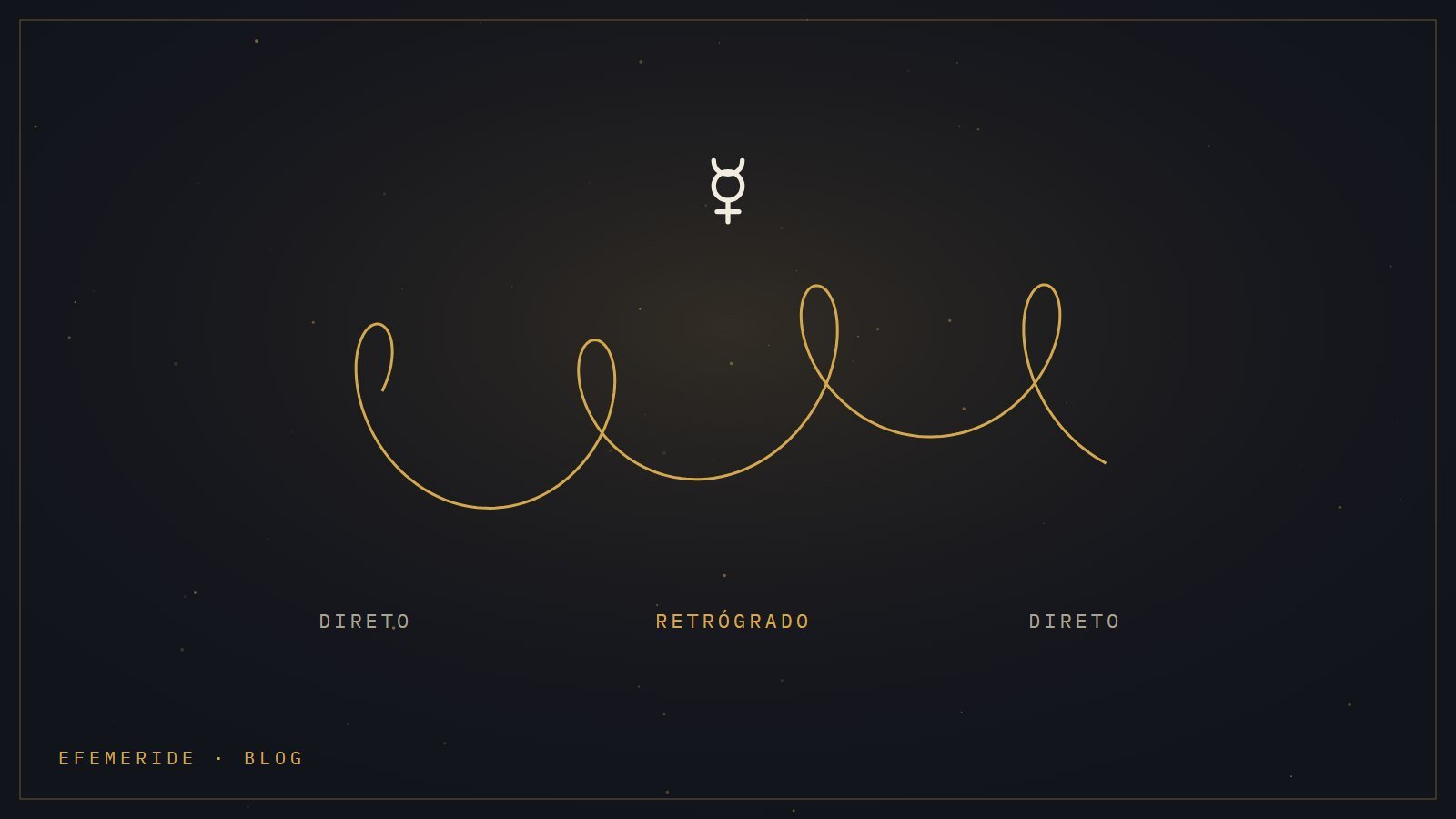
Mercury never reverses the direction of its own orbit. It goes around the Sun always in the same direction, like every planet. Retrograde motion is an apparent motion: it is what we see from here, because the Earth is moving too.
Mercury is the planet closest to the Sun and completes one orbit in about 88 days, much faster than the Earth. When it passes between the Earth and the Sun, the viewing angle changes so quickly that, against the background of stars, Mercury seems to slow down, stop and move backward through the zodiac for a few weeks. Then it seems to stop again and resumes direct motion.
A comparison helps: picture two runners on a circular track, one in the inside lane and faster, the other in the outside lane. When the inside runner passes the stretch closest to the other, the person in the outside lane, watching them against the stands on the far side, sees the runner slide in the opposite direction for a few moments, even though both keep running forward. It is a matter of point of view.
How often and for how long
Mercury turns retrograde about three times a year, sometimes four, and each period lasts around three weeks. All told, the planet spends close to a fifth of the year in retrograde motion. In other words, it is a common phenomenon, part of the normal rhythm of the sky.
Two moments mark the period:
- Retrograde station. The day Mercury seems to stop and begins to move back.
- Direct station. The day it seems to stop again and starts moving forward.
Near the stations, Mercury moves very slowly through the zodiac and stays almost at the same degree for several days. In tradition, these days are read as the most intense of the period. Mercury is not the only one: every planet except the Sun and the Moon has retrograde periods. Venus turns retrograde roughly every year and a half, and Mars approximately every two years. The slow planets spend a few months retrograde every year.
The shadow before and after
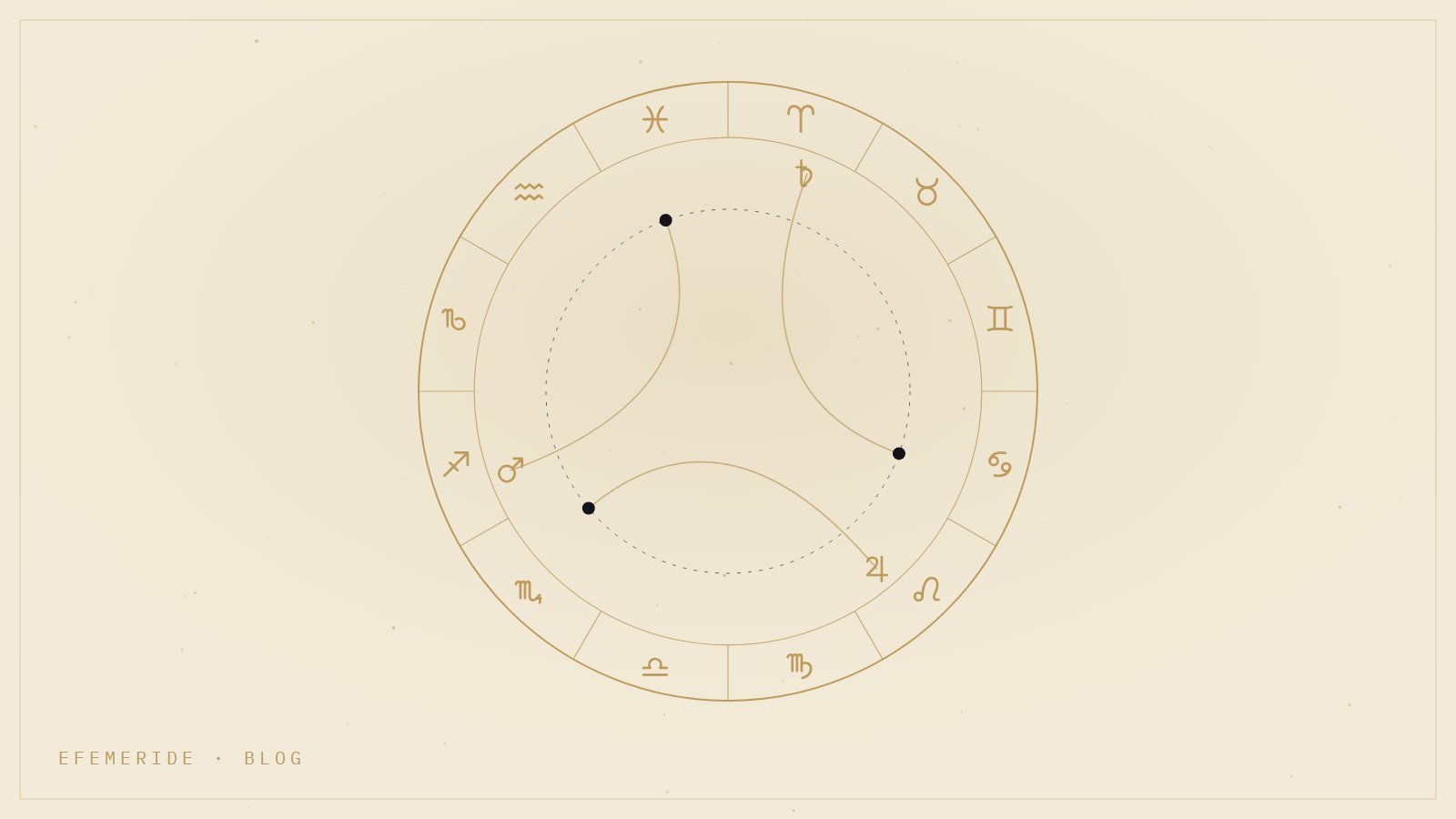
Retrograde motion makes Mercury cross one stretch of the zodiac three times: once going forward, once going back and once going forward again. Astrology calls this stretch the shadow zone.
- Pre-retrograde shadow. It begins when Mercury, still direct, first reaches the degree where it will later station direct. It lasts until the retrograde station, about two weeks.
- Retrograde. Mercury moves back from the degree of the retrograde station to the degree of the direct station, in around three weeks.
- Post-retrograde shadow. After the direct station, Mercury retraces its path until it passes the degree where it began to move back. About two more weeks.
Counting the shadows, the whole cycle takes close to two months. Since these dates come straight from calculating the planet's position, they are known years in advance. There is no surprise and no mystery: it is geometry.
Mercury retrograde is not a punishment from the sky; it is an invitation to go back over what has been done and check it carefully.
What tradition associates with it
Mercury is the planet linked to communication, reasoning, writing, contracts, short trips, trade and the exchange of information. In tradition, when it is retrograde, these themes call for more attention: the common reading is that misunderstandings, delays and revisions become more likely, and that old matters tend to come back.
It is worth reading this in proportion. Messages are misread, systems fail and flights are delayed all year long. Retrograde motion does not make these events inevitable, nor does it cause them on its own. What tradition offers is a lens: during these weeks, it suggests looking more carefully at everything that involves words, agreements and details.
It is also worth remembering that the weight of the period varies from person to person. The sign where the retrograde happens, the house of your chart it crosses and the natal points Mercury touches on the way forward and back say more about you than the phenomenon in general.
How to use the period
The best way to make use of Mercury retrograde lies in the prefix that so many words linked to it carry: re. Review, revise, resume, reorganize, reconnect. A few practical ideas:
- Review before you send. Reread important messages, check recipients, attachments and dates.
- Read contracts calmly. Signing may be necessary, and there is no reason to put your life on hold. Just set aside time to read each clause and clear up any doubts.
- Back things up. A good moment to organize files, update passwords and save what matters.
- Resume stalled projects. Ideas left in a drawer can get a second reading, now with a different perspective.
- Reopen pending conversations. Tradition associates the period with reunions and matters that return; use that to clear up what was left unresolved.
- Plan with slack. For trips and deadlines, leave some extra margin. It is a good habit at any time.
In the app, you see the dates of the pre-retrograde shadow, both stations and the post-retrograde shadow, along with the degree where each one happens and the points in your chart that Mercury will touch along the way.
To close
Mercury retrograde is an effect of perspective: the planet keeps moving forward, and it is our point of view, from a moving Earth, that creates the illusion of moving back. It happens about three times a year, lasts around three weeks and is surrounded by two shadow periods that the calculation shows precisely. Without panic and without fatalism, these weeks can be a time for review, for care with words and for picking up what deserves a second chance.