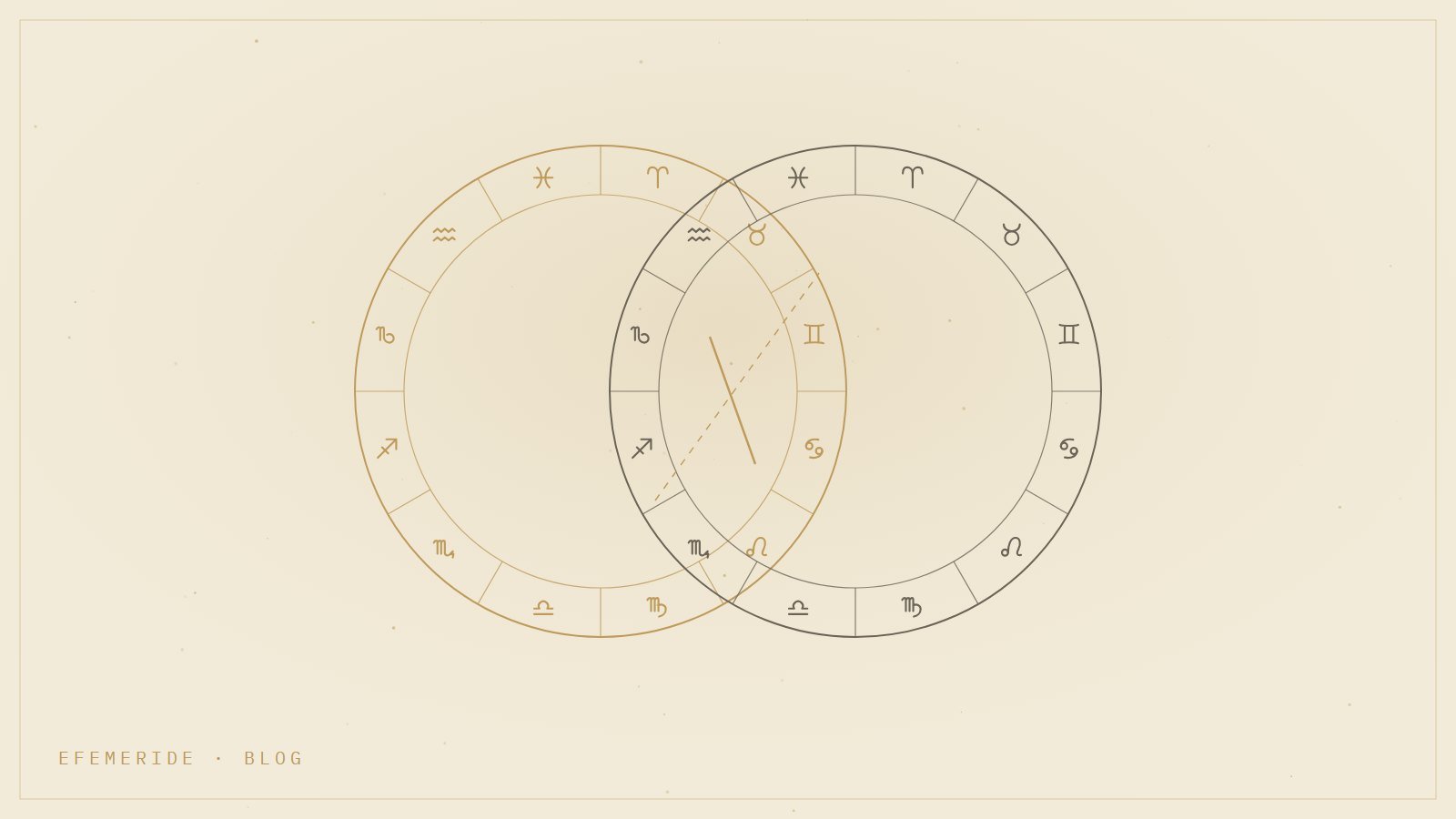
Your birth chart does not change: it records where the Sun, the Moon and the planets were at the moment you were born. The sky, on the other hand, keeps moving. Every day the planets take new positions, and from time to time one of them passes over a point in your chart, or forms an important angle with it. Astrology calls this meeting a transit. It is the most direct way to relate today's real sky to your own story, and understanding how it works helps you read these phases calmly, without waiting for verdicts.
What a transit is
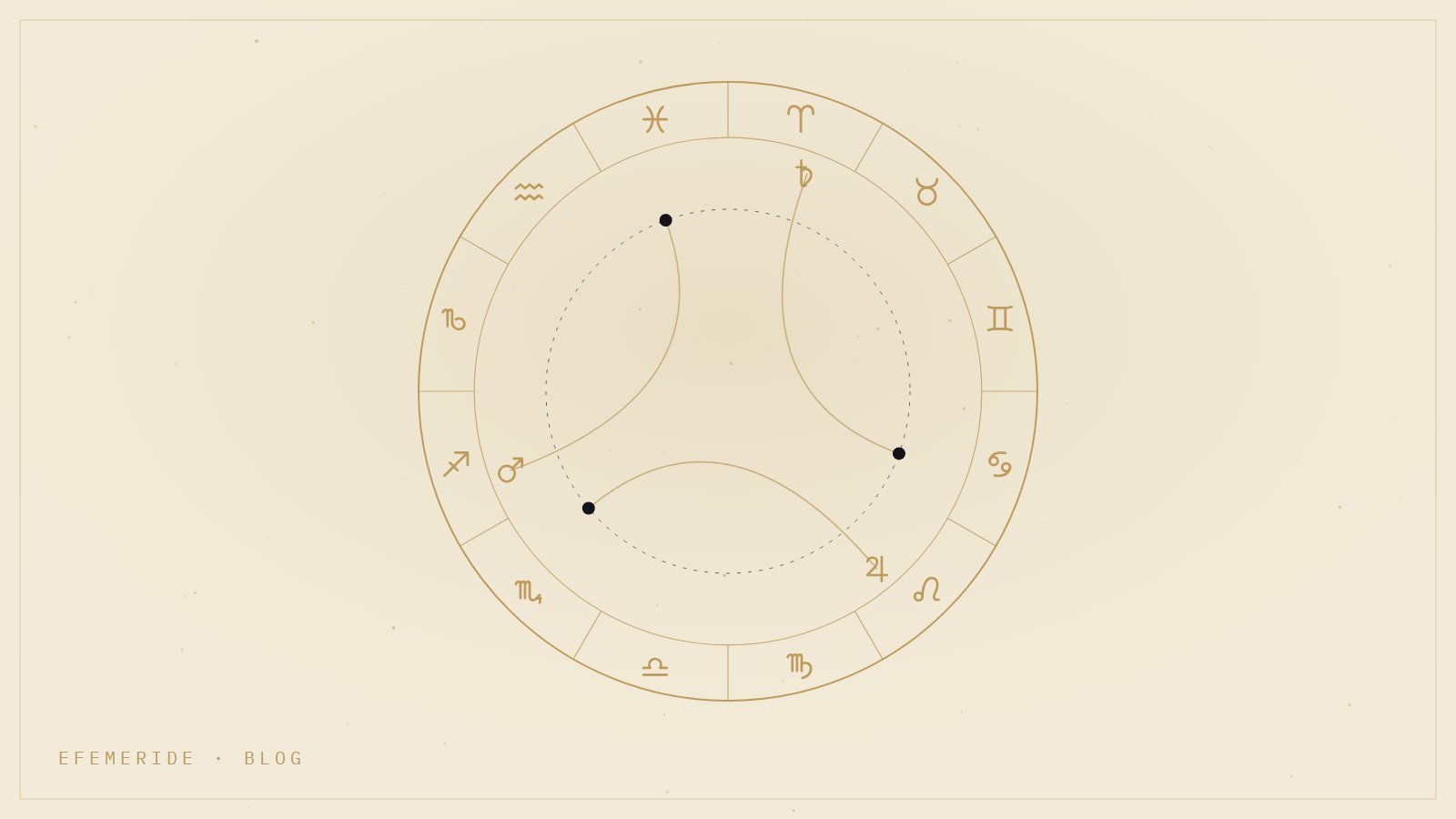
A transit happens when a planet, in the position it holds now, forms an aspect with a planet or point in your birth chart. The most commonly used aspects are the conjunction (0 degrees apart), the opposition (180 degrees), the square (90 degrees), the trine (120 degrees) and the sextile (60 degrees).
A concrete example: if your natal Sun is at 15 degrees Capricorn and Saturn is at 14 degrees Capricorn today, Saturn is conjunct your Sun, one degree away. That one degree is the orb, the margin between the exact angle and the real angle. The smaller the orb, the closer the transit is to exact.
Tradition reads the transiting planet as the theme that arrives and the natal point as the part of you that receives it. Saturn is usually associated with structure, limits and maturing; Jupiter with expansion and opportunity; Uranus with change and disruption; Neptune with sensitivity and dissolution; Pluto with deep transformation. These are reading tendencies, not scripts.
Fast transits and slow transits
A planet's speed defines how long the transit lasts, and that changes a great deal how much weight it tends to carry.
Fast: days or a few weeks
The Moon goes around the whole zodiac in about 27 days and passes over each point in your chart once a month, staying in a tight orb for just a few hours. The Sun moves about one degree a day, so one of its transits lasts a few days. Mercury, Venus and Mars range from days to a few weeks, and linger longer when they are close to a retrograde period. These transits describe the climate of the moment: mood, conversations, encounters, energy.
Slow: months
Jupiter takes about 12 years to go around the zodiac; Saturn, about 29 years; Uranus, 84; Neptune, close to 165; Pluto, about 248. Because they move slowly, their transits over a point in your chart last months. These are the ones tradition associates with phases of life rather than specific days. The Saturn return, when Saturn comes back to the position it held at your birth, happens around age 29, and again close to 58.
Entry, peak and exit: the orb as a window
A transit does not switch on and off in a single day. It has a window, defined by the orb you choose to consider. A clear way to follow it is to split it into three moments:
- Entry. The planet approaches and the aspect enters the chosen orb, for example two degrees from exact. This is when the theme usually starts to show up.
- Peak. The aspect becomes exact, with an orb of zero or close to it. In the traditional reading, this is the point of greatest intensity.
- Exit. The planet moves away and the orb grows again until it leaves the window.
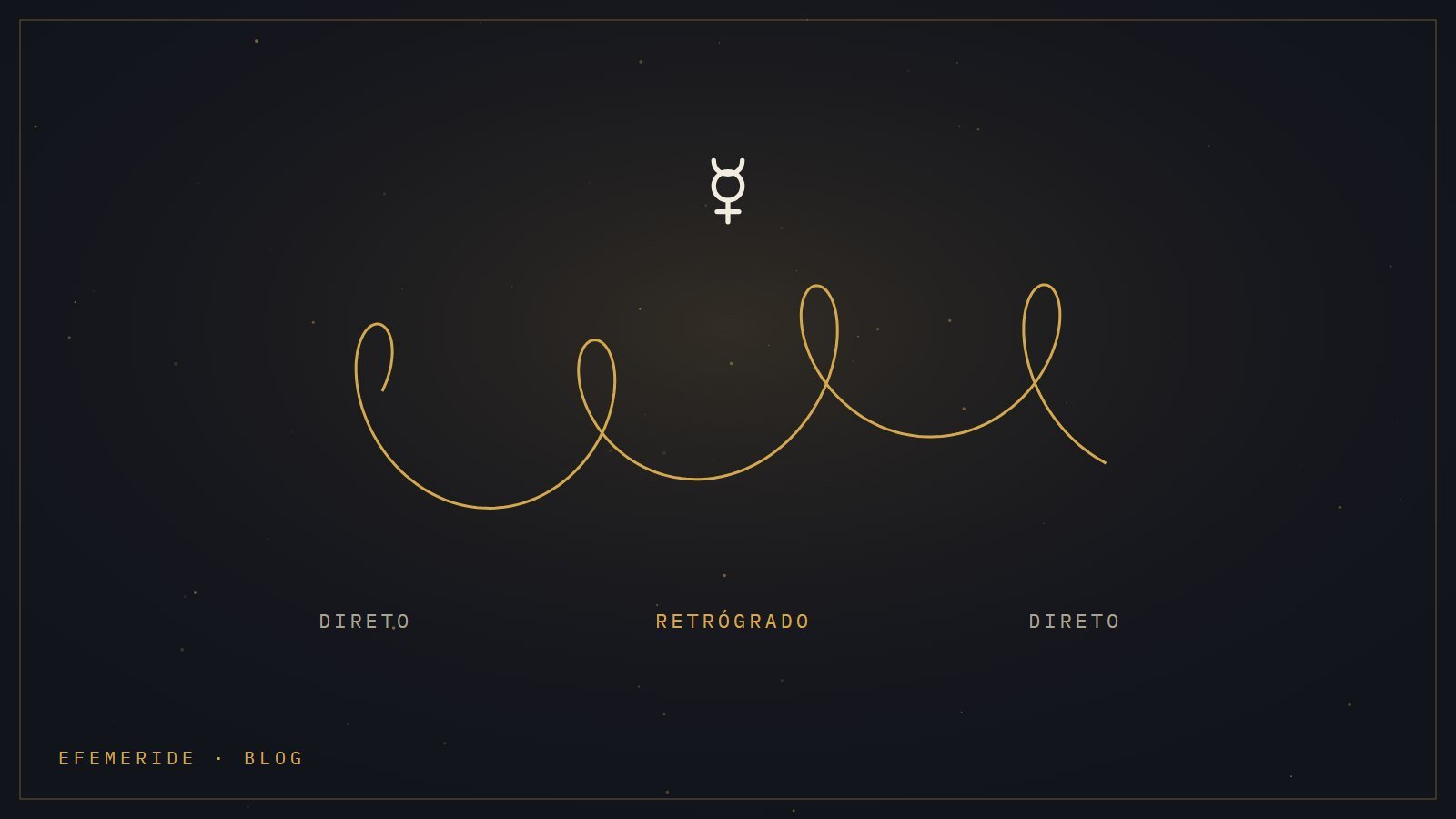
With slow planets there is an important detail. Because they turn retrograde every year, seeming from Earth to move backward for a few months, the same transit can become exact two or three times: once on the way forward, once on the retrograde way back and once more when the planet resumes direct motion. A transit of Saturn over your Sun, counting those passes, can stretch across almost a year.
A transit does not decide what happens: it marks the season when a theme in your chart comes into focus.
Two examples, without determinism
Saturn over the Sun
When Saturn forms a conjunction with your natal Sun, tradition tends to speak of a period of definition. Themes of responsibility, commitment and priorities gain weight. It may be a phase of tiredness with what no longer holds up, or of more serious building of something that matters to you. There is no way to tell from the transit which shape this will take. What it points to is an invitation to look at your own direction more realistically, over a few months, not a scheduled event.
Jupiter on the Midheaven
The Midheaven is the point in the chart linked to public life, career and direction. When Jupiter crosses it, which happens roughly every 12 years, tradition associates it with a phase of greater visibility and a wish to grow in that area. For some people, this shows up as an opportunity; for others, as a reflection on what they want to pursue. Here too the transit describes a tendency, and what you do with it is part of the story. Since the Midheaven depends on your birth time, this transit can only be read reliably when the time is known.
How to follow your transits
A few practices help you read transits without anxiety:
- Start with the slow ones. They show the longer phases and change little from one week to the next.
- Look at the orb and the dates. Knowing when a transit enters, becomes exact and leaves gives context to what you are living and keeps you from reading one day as if it were the whole phase.
- Read it alongside your birth chart. The same transit has different tones depending on the sign, house and aspects of the point it touches.
- Keep a record of what you live. Writing down how each period went lets you notice, over time, what these meetings mean in your own experience.
In the app, each transit shows the transiting planet, the natal point, the aspect, the current orb and the dates of entry, peak and exit. The idea is that you see the calculation before the interpretation, and can check where each sentence comes from.
To close
Transits are the conversation between today's sky and the sky of your birth. The fast ones speak of the climate of the days; the slow ones, of phases that stretch across months. The orb marks when each conversation begins, reaches its peak and ends. Read this way, with dates and degrees in view, they stop being a threat or a promise and become a calendar of themes for you to observe, with the freedom to decide what to do with each one.